
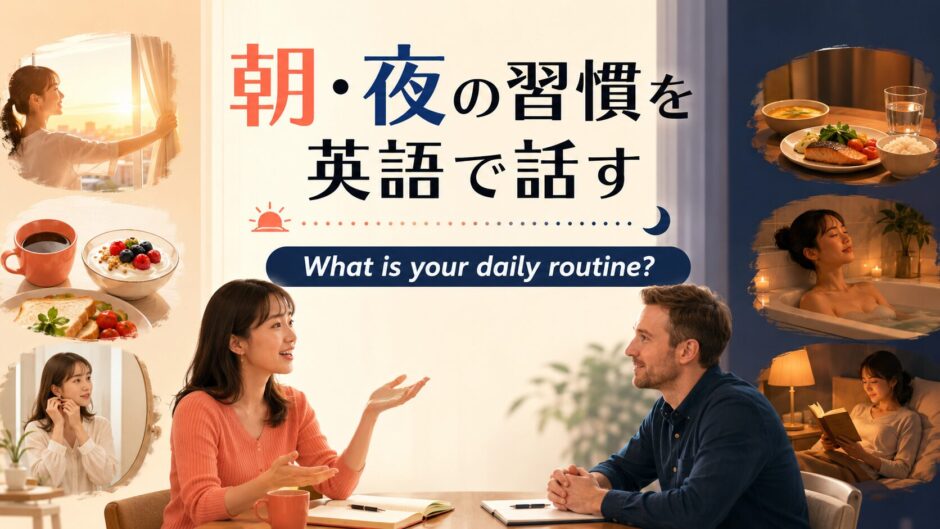

英会話レッスンで What do you usually do in the morning? と聞かれたら、まず I usually make coffee and check my phone.(普段はコーヒーを淹れて、スマートフォンを確認します)のように、毎朝することを一つか二つ答えれば十分です。夜なら I take a bath and read before bed.(お風呂に入り、寝る前に本を読みます)のように答えます。
毎日の習慣は特別な出来事がなくても話せるため、初心者のフリートークに向いています。この記事では、朝と夜の習慣を 何時・何をする・どのくらいの頻度・なぜ の四つに分け、平日と休日の違い、朝型・夜型、やめたい習慣まで簡単な英語で話す方法を紹介します。

朝と夜の習慣はusually+動詞で答える
習慣について講師からよく聞かれる質問です。
- What do you usually do in the morning?
朝は普段何をしますか。 - What is your morning routine?
朝の習慣は何ですか。 - What do you do before bed?
寝る前に何をしますか。 - What time do you usually go to bed?
普段何時に寝ますか。 - Are you a morning person or a night person?
朝型ですか、夜型ですか。
答えは I usually+動詞 が基本です。
- I usually get up at six thirty. 普段6時30分に起きます。
- I always eat breakfast. 必ず朝食を食べます。
- I sometimes exercise before work. ときどき仕事前に運動します。
- I often watch TV after dinner. 夕食後によくテレビを見ます。
- I usually go to bed around eleven. 普段11時ごろに寝ます。
every morning や every night を使う場合は、I drink tea every morning. のように文末へ置くと簡単です。
2-e1785721200758.jpg)
ルーティンというと整った生活を話さなければと思いがちですが、I hit the snooze button twice. や I sometimes fall asleep on the sofa. のような現実的な話も立派な会話です。少し困っている習慣ほど、会話が広がることがあります。
しゅみすけ(大山俊輔)
朝・夜の習慣は4項目で話す
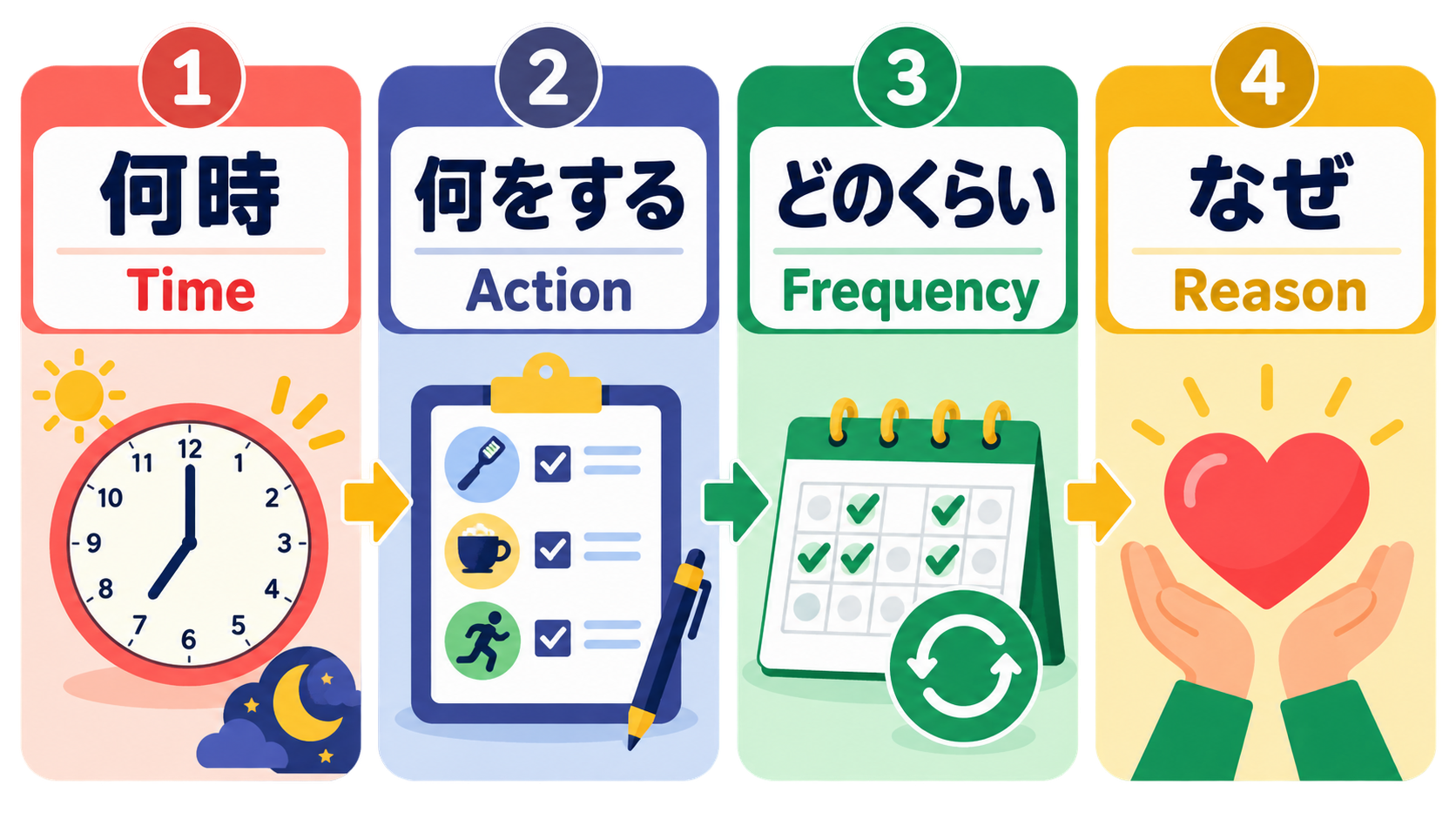
- 何時:起床、食事、入浴、就寝などの時刻
- 何をする:身支度、家事、運動、読書など
- どのくらい:毎日、よく、ときどき、ほとんどしない
- なぜ:目が覚める、落ち着く、時間を節約できるなど
たとえば、I get up around seven. I drink a glass of water first. I do this every day because it helps me wake up. と一文ずつ加えます。四項目すべてが必要ではなく、講師から質問された部分だけ答えても構いません。
朝起きてからすることを英語で話す
- I wake up at six, but I get out of bed at six fifteen.
6時に目が覚めますが、ベッドを出るのは6時15分です。 - I open the curtains and let in some light.
カーテンを開けて光を入れます。 - I drink water as soon as I get up.
起きるとすぐ水を飲みます。 - I check the weather on my phone.
スマートフォンで天気を確認します。 - I make coffee before I do anything else.
ほかのことをする前にコーヒーを淹れます。 - I need a little time to fully wake up.
完全に目が覚めるまで少し時間が必要です。
朝の身支度と朝食について話す
- I take a quick shower. さっとシャワーを浴びます。
- I brush my teeth and wash my face. 歯を磨き、顔を洗います。
- It takes me about twenty minutes to get ready. 身支度に約20分かかります。
- I usually have toast and yogurt for breakfast. 朝食には普段トーストとヨーグルトを食べます。
- I often skip breakfast when I’m busy. 忙しいときは朝食を抜くことがよくあります。
- I prepare my lunch before leaving home. 家を出る前に昼食を用意します。
仕事や外出前の習慣を話す
- I leave home around eight. 8時ごろ家を出ます。
- I check my schedule before I start work. 仕事を始める前に予定を確認します。
- I listen to music on the train. 電車で音楽を聴きます。
- I walk to the station for a little exercise. 少し運動するため駅まで歩きます。
- I work from home three days a week. 週3日は在宅勤務です。
- On work-from-home days, my mornings are less rushed. 在宅勤務の日は朝にあまり慌てません。
「朝はバタバタする」は My mornings are busy.、I have to rush in the morning. と説明できます。
帰宅してからの夜の習慣を話す
- I usually get home around seven. 普段7時ごろ帰宅します。
- I change into comfortable clothes. 楽な服に着替えます。
- I cook dinner or buy something on the way home. 夕食を作るか、帰り道で何か買います。
- I clean up the kitchen after dinner. 夕食後にキッチンを片づけます。
- I watch a drama while I eat. 食事をしながらドラマを見ます。
- I talk with my family about our day. 家族とその日の出来事について話します。
寝る前の習慣を話す
- I take a bath before bed. 寝る前にお風呂に入ります。
- I do some light stretching. 軽くストレッチします。
- I read for about fifteen minutes. 15分ほど本を読みます。
- I set my alarm for the next morning. 翌朝のアラームを設定します。
- I try not to look at my phone in bed. ベッドではスマートフォンを見ないようにしています。
- I sometimes fall asleep while watching TV. テレビを見ながら寝落ちすることがあります。
頻度を加えて「毎日ではない」を伝える
- always いつも、必ず
- usually 普段は
- often よく
- sometimes ときどき
- rarely めったに〜しない
- never 一度も〜しない
これらは一般に動詞の前へ置きます。I often take a walk after dinner. の形です。be 動詞なら、I am usually tired at night. のように後ろへ置きます。
正確な頻度を言いたい場合は、twice a week(週2回)、once or twice a month(月1〜2回)、almost every day(ほぼ毎日)が使えます。
朝型・夜型について話す
- I’m a morning person. 朝型です。
- I’m more of a night person. どちらかというと夜型です。
- I have more energy in the morning. 朝のほうが元気です。
- I can concentrate better at night. 夜のほうが集中できます。
- I’m trying to go to bed earlier. もっと早く寝るようにしています。
- My schedule changes depending on my work. 仕事によって生活時間が変わります。
平日と休日の違いを話す
- On weekdays, I get up at six, but on weekends, I sleep until eight.
平日は6時に起きますが、週末は8時まで寝ます。 - My weekday mornings are rushed.
平日の朝は慌ただしいです。 - I take my time with breakfast on my days off.
休日はゆっくり朝食を食べます。 - I stay up a little later on Friday nights.
金曜の夜は少し夜更かしします。 - My routine is not very regular on weekends.
週末の生活習慣はあまり規則的ではありません。
休日全体の過ごし方を詳しく話す場合は、習慣ではなく活動や相手へ焦点を移します。
変えたい習慣をやわらかく話す
- I spend too much time on my phone at night. 夜にスマートフォンを見すぎます。
- I tend to stay up too late. 夜更かししがちです。
- I often press the snooze button. よくスヌーズボタンを押します。
- I know I should exercise in the morning, but it’s difficult. 朝に運動すべきだとは思いますが、難しいです。
- I’m trying to build a better sleep routine. よりよい睡眠習慣を作ろうとしています。
- I’d like to stop checking email before bed. 寝る前にメールを見るのをやめたいです。
tend to は「〜しがち」、I’m trying to… は改善中の取り組みを話すときに便利です。
講師からよく聞かれる追加質問
What is the first thing you do in the morning?
The first thing I do is open the curtains and drink water.
最初にするのは、カーテンを開けて水を飲むことです。
Do you eat breakfast every day?
Most days, yes. I usually have something simple.
ほとんどの日は食べます。普段は簡単なものです。
How do you relax at night?
I take a bath and listen to music.
お風呂に入り、音楽を聴きます。
How many hours do you sleep?
I usually sleep for about six and a half hours.
普段は6時間半ほど寝ます。
Is your routine different on weekends?
Yes. I get up later and spend more time making breakfast.
はい。遅く起き、朝食作りにより時間をかけます。
会話例:平日の朝と夜について話す
Teacher: What do you usually do in the morning?
You: I get up around six thirty and make coffee.
Teacher: Do you eat breakfast?
You: Yes. I usually have toast and fruit. Then I leave home at eight.
Teacher: What do you do at night?
You: I cook dinner, take a bath, and read for a few minutes before bed.
Teacher: Are you a morning person?
You: Not really. I need coffee to wake up. How about you?
時刻、朝の行動、夜の行動、自分のタイプを短く答え、最後に質問を返しています。日常の話なので、講師との共通点や違いも見つけやすいテーマです。
英語が出てこないときは習慣を「小さな動作」に分ける
「朝はバタバタする」「夜はだらだらする」「寝つきが悪い」のような日本語を一語で訳そうとすると難しくなります。実際にしている小さな動作へ分けましょう。
- 朝はバタバタする → I don’t have much time. I get ready quickly and rush out.
- 夜はだらだらする → I watch videos and check my phone. I don’t notice the time.
- 寝つきが悪い → I go to bed, but I can’t fall asleep quickly.
- 二度寝する → I wake up, turn off the alarm, and go back to sleep.
- 頭を切り替える → I take a bath or walk. It helps me forget about work.
これが「でてこないときのしゅみすけ式」です。状態を一語で探さず、「何をする」「次にどうなる」という順に分ければ、基本動詞で生活の様子を伝えられます。
「だらだらする」の正解訳を探さなくても、I watch videos. I check social media. I stay on the sofa for a long time. と行動を並べれば、夜の様子が具体的に伝わります。
しゅみすけ(大山俊輔)
講師へ質問を返して会話を続ける
- What is your morning routine? 朝の習慣は何ですか。
- What time do you usually go to bed? 普段何時に寝ますか。
- Are you a morning person or a night person? 朝型ですか、夜型ですか。
- How do you relax after work? 仕事後はどうやってくつろぎますか。
- Is your weekend routine different? 週末の習慣は違いますか。
関連記事で日常生活の話を広げる
休日の習慣や活動を詳しく話すなら、英会話レッスンで休日の過ごし方について話すへ進んでください。学生時代との生活の違いを比べるなら、英会話レッスンで学生時代について話すも使えます。
ほかの身近な話題は、自分・家族・暮らしについて話す初心者向け記事一覧や、英会話のフリートークで使える話題一覧から準備できます。
usually・often・sometimes など頻度の言葉は、be:RIZEの日常英会話でよく使う副詞20選でまとめて確認できます。
まとめ:毎日の小さな動作を一文ずつ話そう
朝と夜の習慣を聞かれたら、まず I usually+動詞 で一つ答えます。次に、時刻、頻度、理由から一つを足してください。平日と休日の違いや、変えたい習慣も自然な会話の材料になります。
言いたい日本語が難しいときは、実際にしている小さな動作へ分けます。特別なルーティンでなくても、自分の日常を簡単な英語にすることが実用的な練習になります。
朝や夜の習慣について英語で話してみたい方へ
b わたしの英会話は、英語が初めて・久しぶりという大人女性のためのマンツーマン英会話教室です。毎日の暮らしなど、自分に近いテーマを使い、知っている英語で会話を組み立てる練習ができます。



[…] 朝・夜の習慣について話す […]